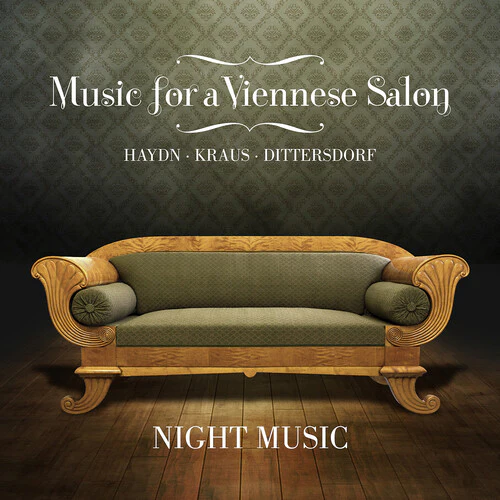
Music for a Viennese Salon / Night Music
Philadelphia-based period-instrument ensemble Night Music re-creates an afternoon of music making from October 1801 at the Austrian capital’s Palais Arnstein, with a flamboyant Quintet for flute and strings by Joseph Kraus, a duo by Carl Ditters von Dittersdorf for the unusual combination of viola and double bass, and a chamber arrangement – by the impresario Johann Peter Salomon utilizing the same instrumentation as the Kraus Quintet – of perhaps the most notorious of symphonic surprises. NIGHT MUSIC is a Philadelphia-based chamber ensemble dedicated to exploring and performing music of the Revolutionary era, roughly 1760 to 1825. Their repertory ranges from duos and trios to large-scale chamber works combining strings and winds, such as the imaginative symphony arrangements that were so popular around 1800, to concertos, cantatas, and concert arias. The 2019-2020 season highlights include guest appearances at Kenyon College and the University of Pennsylvania’s “Music at the Pavilion” Series. Recent engagements include the PhilaLandmarks Early Music Concert Series and the Early Music at St. James series in Lancaster.
REVIEW:
The Kraus Flute Quintet makes an excellent opening, likely to make you wonder why we don’t hear more of this Swedish composer’s music. Although the flute is first among equals here, it’s by no means a showy piece for a soloist. Night Music perfectly integrate flute and strings, and the recording is also very well integrated.
Is Salomon’s arrangement of Haydn's ‘Surprise’ Symphony equally worthy of recording? The music makes a good effect, charming music at this scale, receiving a charming performance; as in the Kraus, the flautist and the engineers don’t allow the instrument to dominate. With such small forces, however, the feature which earned the work its nickname, the sudden change from quiet to loud in the andante second movement, designed ‘to make the ladies jump’ – Beecham used to bring it off especially well – doesn’t quite come off, despite a claim to the contrary in the booklet. That said, this is an enjoyable work in its own inevitably diminished right.
I can’t claim great music status for the Dittersdorf Duo, but it, too, receives a performance which brings out its attractions, and the recording captures the unusual sound of the combination very effectively.
– MusicWeb International
Product Information
Product Information
Shipping & Returns
Shipping & Returns
Music for a Viennese Salon / Night Music
Music for a Viennese Salon / Night Music
Philadelphia-based period-instrument ensemble Night Music re-creates an afternoon of music making from October 1801 at the Austrian capital’s Palais Arnstein, with a flamboyant Quintet for flute and strings by Joseph Kraus, a duo by Carl Ditters von Dittersdorf for the unusual combination of viola and double bass, and a chamber arrangement – by the impresario Johann Peter Salomon utilizing the same instrumentation as the Kraus Quintet – of perhaps the most notorious of symphonic surprises. NIGHT MUSIC is a Philadelphia-based chamber ensemble dedicated to exploring and performing music of the Revolutionary era, roughly 1760 to 1825. Their repertory ranges from duos and trios to large-scale chamber works combining strings and winds, such as the imaginative symphony arrangements that were so popular around 1800, to concertos, cantatas, and concert arias. The 2019-2020 season highlights include guest appearances at Kenyon College and the University of Pennsylvania’s “Music at the Pavilion” Series. Recent engagements include the PhilaLandmarks Early Music Concert Series and the Early Music at St. James series in Lancaster.
REVIEW:
The Kraus Flute Quintet makes an excellent opening, likely to make you wonder why we don’t hear more of this Swedish composer’s music. Although the flute is first among equals here, it’s by no means a showy piece for a soloist. Night Music perfectly integrate flute and strings, and the recording is also very well integrated.
Is Salomon’s arrangement of Haydn's ‘Surprise’ Symphony equally worthy of recording? The music makes a good effect, charming music at this scale, receiving a charming performance; as in the Kraus, the flautist and the engineers don’t allow the instrument to dominate. With such small forces, however, the feature which earned the work its nickname, the sudden change from quiet to loud in the andante second movement, designed ‘to make the ladies jump’ – Beecham used to bring it off especially well – doesn’t quite come off, despite a claim to the contrary in the booklet. That said, this is an enjoyable work in its own inevitably diminished right.
I can’t claim great music status for the Dittersdorf Duo, but it, too, receives a performance which brings out its attractions, and the recording captures the unusual sound of the combination very effectively.
– MusicWeb International
Product Information
Product Information
Shipping & Returns
Shipping & Returns
Description
Philadelphia-based period-instrument ensemble Night Music re-creates an afternoon of music making from October 1801 at the Austrian capital’s Palais Arnstein, with a flamboyant Quintet for flute and strings by Joseph Kraus, a duo by Carl Ditters von Dittersdorf for the unusual combination of viola and double bass, and a chamber arrangement – by the impresario Johann Peter Salomon utilizing the same instrumentation as the Kraus Quintet – of perhaps the most notorious of symphonic surprises. NIGHT MUSIC is a Philadelphia-based chamber ensemble dedicated to exploring and performing music of the Revolutionary era, roughly 1760 to 1825. Their repertory ranges from duos and trios to large-scale chamber works combining strings and winds, such as the imaginative symphony arrangements that were so popular around 1800, to concertos, cantatas, and concert arias. The 2019-2020 season highlights include guest appearances at Kenyon College and the University of Pennsylvania’s “Music at the Pavilion” Series. Recent engagements include the PhilaLandmarks Early Music Concert Series and the Early Music at St. James series in Lancaster.
REVIEW:
The Kraus Flute Quintet makes an excellent opening, likely to make you wonder why we don’t hear more of this Swedish composer’s music. Although the flute is first among equals here, it’s by no means a showy piece for a soloist. Night Music perfectly integrate flute and strings, and the recording is also very well integrated.
Is Salomon’s arrangement of Haydn's ‘Surprise’ Symphony equally worthy of recording? The music makes a good effect, charming music at this scale, receiving a charming performance; as in the Kraus, the flautist and the engineers don’t allow the instrument to dominate. With such small forces, however, the feature which earned the work its nickname, the sudden change from quiet to loud in the andante second movement, designed ‘to make the ladies jump’ – Beecham used to bring it off especially well – doesn’t quite come off, despite a claim to the contrary in the booklet. That said, this is an enjoyable work in its own inevitably diminished right.
I can’t claim great music status for the Dittersdorf Duo, but it, too, receives a performance which brings out its attractions, and the recording captures the unusual sound of the combination very effectively.
– MusicWeb International