🚚 Free Worldwide Shipping on All Orders!Shop Now
Glass: Symphonies Nos 2 & 3 / Alsop, Bournemouth Symphony
The competition is full-priced, from Nonesuch, and the formidable Glass-specialist and collaborator Dennis Russell Davies. On sonic grounds, I’d prefer this new Naxos disc of two symphonies from the mid 1990s. Davies is irreproachable as a Glass conductor, but in the case of these works, I find the Nonesuch recordings a touch claustrophobic, with much of the air sucked out of the acoustic. The older Glass/Naxos disc was even more successful in this regard (the Violin Concerto on 8.554568) but this is pretty good sound, captured by Tim Handley in the Concert Hall, Lighthouse, by the busy harbor at Poole in Dorset, England. The bustling, maritime setting seems to infect the music-making, especially for the rousing finale of the Second Symphony, like an Olympic yacht-race through a choppy sea on a bright, bracing morning. American symphonies used to stumble at the finale obstacle (so did symphonies everywhere) but through patient application of his familiar style, and his patented modal, orchestral dynamism, Glass whizzes around the course with no faults or penalties. This should make converts of anyone who enjoys symphonies from Bax to Bernstein.
Elsewhere, the dark and brooding moods are never overplayed or undersold by Marin Alsop. This isn’t the world’s most virtuosic band, but they rarely, and only very slightly sound strained by Glass’s high-lying violin lines. More performances from the big-name orchestras would bring a more expressive, forthright performing tradition, and maybe a faster finale for the Third. Glass’s Indian roots are often on display (there’s an Eastern cut to his thematic jib, here), but expressive results are fruitful. There are some reminders of other symphonists. In the Second it sometimes seems Alan Hovhaness, Lou Harrison, and Bill Schuman have met up for a drink with Sibelius, who is playing the Widor Toccata over there in the corner. Glass’s individual symphonism works, though, in this 43-minute piece, thanks to the skillful manipulation of orchestral contrasts as a structural device, a legacy, maybe, of his film-score experience. The Third Symphony is closer to the Glass mainstream, in four short movements for strings alone. Here, Alsop’s patient approach brings out the meaning in the music, away from the talk of polyrhythm and process. There’s fear, anxiety, and dismay (the world) behind some of those sunny repetitions, and physicality in the dance rhythms. Well-caught pizzicatos in the second movement, too, and an expressive solo display from the violin in the edgy, pulsating third section, which is a major success in this tense, sensual reading.
I wholeheartedly recommend this release (the first of a cycle, I trust), and again salute Philip Glass for doing it his way. The music deserves the widest exposure and popularity, and it deepens with acquaintance. This Naxos CD transformed my opinion of these works.
Paul Ingram, FANFARE
Philip Glass' symphonies are unique among the composer's output for their relative harmonic and thematic complexity. Listeners put off by Glass' endlessly repeated arpeggios will be relieved to find scant evidence of them in these works. Instead, like his opera Beauty and the Beast, Glass spins long melodic lines that go through many harmonic permutations before they are inevitably repeated. Thus, Symphony No. 2's first movement creates an air of expectation, something that Glass maintains through shifting instrumental timbres and stimulating dynamic contrast as the movement builds, Bolero-like, to a grand climax. After the soothing, somewhat meditative sonic environment of the slow movement, the finale breaks in with its agitated dance rhythms. This movement has the least harmonic variety of the three, and listeners unsympathetic to Glass' method may experience repetition fatigue.
Symphony No. 3 is almost radical in its use of traditional forms, including chaconne and rondo. Glass replaces the expansiveness of the earlier work with a highly concentrated thematic process that packs substantially more musical ideas into only slightly more than half the former symphony's duration. The second movement is particularly interesting, with its compound meters and hints of Bartók. Marin Alsop brings her long familiarity with the composer's music to her convincing performances of both works, although she faces strong competition in the No. 3 from Glass specialist Dennis Russell Davies, who leads a slightly more compelling rendition with the Stuttgart Chamber Orchestra. For its part, the Bournemouth Symphony plays keenly, maintaining enthusiasm and rhythmic exactitude even in the more repetitious passages. Naxos' warm and spacious recording presents the music with a compelling impact. [12/03/2004]
--Victor Carr Jr, ClassicsToday.com
Elsewhere, the dark and brooding moods are never overplayed or undersold by Marin Alsop. This isn’t the world’s most virtuosic band, but they rarely, and only very slightly sound strained by Glass’s high-lying violin lines. More performances from the big-name orchestras would bring a more expressive, forthright performing tradition, and maybe a faster finale for the Third. Glass’s Indian roots are often on display (there’s an Eastern cut to his thematic jib, here), but expressive results are fruitful. There are some reminders of other symphonists. In the Second it sometimes seems Alan Hovhaness, Lou Harrison, and Bill Schuman have met up for a drink with Sibelius, who is playing the Widor Toccata over there in the corner. Glass’s individual symphonism works, though, in this 43-minute piece, thanks to the skillful manipulation of orchestral contrasts as a structural device, a legacy, maybe, of his film-score experience. The Third Symphony is closer to the Glass mainstream, in four short movements for strings alone. Here, Alsop’s patient approach brings out the meaning in the music, away from the talk of polyrhythm and process. There’s fear, anxiety, and dismay (the world) behind some of those sunny repetitions, and physicality in the dance rhythms. Well-caught pizzicatos in the second movement, too, and an expressive solo display from the violin in the edgy, pulsating third section, which is a major success in this tense, sensual reading.
I wholeheartedly recommend this release (the first of a cycle, I trust), and again salute Philip Glass for doing it his way. The music deserves the widest exposure and popularity, and it deepens with acquaintance. This Naxos CD transformed my opinion of these works.
Paul Ingram, FANFARE
Philip Glass' symphonies are unique among the composer's output for their relative harmonic and thematic complexity. Listeners put off by Glass' endlessly repeated arpeggios will be relieved to find scant evidence of them in these works. Instead, like his opera Beauty and the Beast, Glass spins long melodic lines that go through many harmonic permutations before they are inevitably repeated. Thus, Symphony No. 2's first movement creates an air of expectation, something that Glass maintains through shifting instrumental timbres and stimulating dynamic contrast as the movement builds, Bolero-like, to a grand climax. After the soothing, somewhat meditative sonic environment of the slow movement, the finale breaks in with its agitated dance rhythms. This movement has the least harmonic variety of the three, and listeners unsympathetic to Glass' method may experience repetition fatigue.
Symphony No. 3 is almost radical in its use of traditional forms, including chaconne and rondo. Glass replaces the expansiveness of the earlier work with a highly concentrated thematic process that packs substantially more musical ideas into only slightly more than half the former symphony's duration. The second movement is particularly interesting, with its compound meters and hints of Bartók. Marin Alsop brings her long familiarity with the composer's music to her convincing performances of both works, although she faces strong competition in the No. 3 from Glass specialist Dennis Russell Davies, who leads a slightly more compelling rendition with the Stuttgart Chamber Orchestra. For its part, the Bournemouth Symphony plays keenly, maintaining enthusiasm and rhythmic exactitude even in the more repetitious passages. Naxos' warm and spacious recording presents the music with a compelling impact. [12/03/2004]
--Victor Carr Jr, ClassicsToday.com
Product Information
Product Information
Shipping & Returns
Shipping & Returns

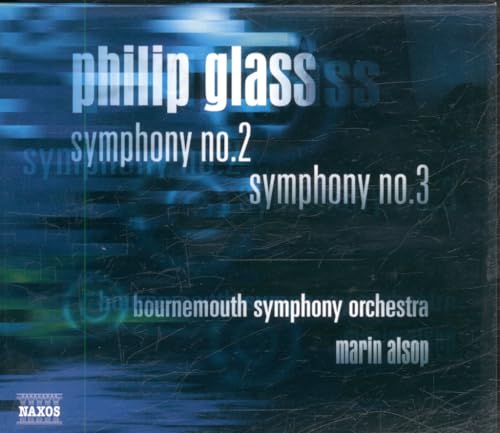
Glass: Symphonies Nos 2 & 3 / Alsop, Bournemouth Symphony
Glass: Symphonies Nos 2 & 3 / Alsop, Bournemouth Symphony
The competition is full-priced, from Nonesuch, and the formidable Glass-specialist and collaborator Dennis Russell Davies. On sonic grounds, I’d prefer this new Naxos disc of two symphonies from the mid 1990s. Davies is irreproachable as a Glass conductor, but in the case of these works, I find the Nonesuch recordings a touch claustrophobic, with much of the air sucked out of the acoustic. The older Glass/Naxos disc was even more successful in this regard (the Violin Concerto on 8.554568) but this is pretty good sound, captured by Tim Handley in the Concert Hall, Lighthouse, by the busy harbor at Poole in Dorset, England. The bustling, maritime setting seems to infect the music-making, especially for the rousing finale of the Second Symphony, like an Olympic yacht-race through a choppy sea on a bright, bracing morning. American symphonies used to stumble at the finale obstacle (so did symphonies everywhere) but through patient application of his familiar style, and his patented modal, orchestral dynamism, Glass whizzes around the course with no faults or penalties. This should make converts of anyone who enjoys symphonies from Bax to Bernstein.
Elsewhere, the dark and brooding moods are never overplayed or undersold by Marin Alsop. This isn’t the world’s most virtuosic band, but they rarely, and only very slightly sound strained by Glass’s high-lying violin lines. More performances from the big-name orchestras would bring a more expressive, forthright performing tradition, and maybe a faster finale for the Third. Glass’s Indian roots are often on display (there’s an Eastern cut to his thematic jib, here), but expressive results are fruitful. There are some reminders of other symphonists. In the Second it sometimes seems Alan Hovhaness, Lou Harrison, and Bill Schuman have met up for a drink with Sibelius, who is playing the Widor Toccata over there in the corner. Glass’s individual symphonism works, though, in this 43-minute piece, thanks to the skillful manipulation of orchestral contrasts as a structural device, a legacy, maybe, of his film-score experience. The Third Symphony is closer to the Glass mainstream, in four short movements for strings alone. Here, Alsop’s patient approach brings out the meaning in the music, away from the talk of polyrhythm and process. There’s fear, anxiety, and dismay (the world) behind some of those sunny repetitions, and physicality in the dance rhythms. Well-caught pizzicatos in the second movement, too, and an expressive solo display from the violin in the edgy, pulsating third section, which is a major success in this tense, sensual reading.
I wholeheartedly recommend this release (the first of a cycle, I trust), and again salute Philip Glass for doing it his way. The music deserves the widest exposure and popularity, and it deepens with acquaintance. This Naxos CD transformed my opinion of these works.
Paul Ingram, FANFARE
Philip Glass' symphonies are unique among the composer's output for their relative harmonic and thematic complexity. Listeners put off by Glass' endlessly repeated arpeggios will be relieved to find scant evidence of them in these works. Instead, like his opera Beauty and the Beast, Glass spins long melodic lines that go through many harmonic permutations before they are inevitably repeated. Thus, Symphony No. 2's first movement creates an air of expectation, something that Glass maintains through shifting instrumental timbres and stimulating dynamic contrast as the movement builds, Bolero-like, to a grand climax. After the soothing, somewhat meditative sonic environment of the slow movement, the finale breaks in with its agitated dance rhythms. This movement has the least harmonic variety of the three, and listeners unsympathetic to Glass' method may experience repetition fatigue.
Symphony No. 3 is almost radical in its use of traditional forms, including chaconne and rondo. Glass replaces the expansiveness of the earlier work with a highly concentrated thematic process that packs substantially more musical ideas into only slightly more than half the former symphony's duration. The second movement is particularly interesting, with its compound meters and hints of Bartók. Marin Alsop brings her long familiarity with the composer's music to her convincing performances of both works, although she faces strong competition in the No. 3 from Glass specialist Dennis Russell Davies, who leads a slightly more compelling rendition with the Stuttgart Chamber Orchestra. For its part, the Bournemouth Symphony plays keenly, maintaining enthusiasm and rhythmic exactitude even in the more repetitious passages. Naxos' warm and spacious recording presents the music with a compelling impact. [12/03/2004]
--Victor Carr Jr, ClassicsToday.com
Elsewhere, the dark and brooding moods are never overplayed or undersold by Marin Alsop. This isn’t the world’s most virtuosic band, but they rarely, and only very slightly sound strained by Glass’s high-lying violin lines. More performances from the big-name orchestras would bring a more expressive, forthright performing tradition, and maybe a faster finale for the Third. Glass’s Indian roots are often on display (there’s an Eastern cut to his thematic jib, here), but expressive results are fruitful. There are some reminders of other symphonists. In the Second it sometimes seems Alan Hovhaness, Lou Harrison, and Bill Schuman have met up for a drink with Sibelius, who is playing the Widor Toccata over there in the corner. Glass’s individual symphonism works, though, in this 43-minute piece, thanks to the skillful manipulation of orchestral contrasts as a structural device, a legacy, maybe, of his film-score experience. The Third Symphony is closer to the Glass mainstream, in four short movements for strings alone. Here, Alsop’s patient approach brings out the meaning in the music, away from the talk of polyrhythm and process. There’s fear, anxiety, and dismay (the world) behind some of those sunny repetitions, and physicality in the dance rhythms. Well-caught pizzicatos in the second movement, too, and an expressive solo display from the violin in the edgy, pulsating third section, which is a major success in this tense, sensual reading.
I wholeheartedly recommend this release (the first of a cycle, I trust), and again salute Philip Glass for doing it his way. The music deserves the widest exposure and popularity, and it deepens with acquaintance. This Naxos CD transformed my opinion of these works.
Paul Ingram, FANFARE
Philip Glass' symphonies are unique among the composer's output for their relative harmonic and thematic complexity. Listeners put off by Glass' endlessly repeated arpeggios will be relieved to find scant evidence of them in these works. Instead, like his opera Beauty and the Beast, Glass spins long melodic lines that go through many harmonic permutations before they are inevitably repeated. Thus, Symphony No. 2's first movement creates an air of expectation, something that Glass maintains through shifting instrumental timbres and stimulating dynamic contrast as the movement builds, Bolero-like, to a grand climax. After the soothing, somewhat meditative sonic environment of the slow movement, the finale breaks in with its agitated dance rhythms. This movement has the least harmonic variety of the three, and listeners unsympathetic to Glass' method may experience repetition fatigue.
Symphony No. 3 is almost radical in its use of traditional forms, including chaconne and rondo. Glass replaces the expansiveness of the earlier work with a highly concentrated thematic process that packs substantially more musical ideas into only slightly more than half the former symphony's duration. The second movement is particularly interesting, with its compound meters and hints of Bartók. Marin Alsop brings her long familiarity with the composer's music to her convincing performances of both works, although she faces strong competition in the No. 3 from Glass specialist Dennis Russell Davies, who leads a slightly more compelling rendition with the Stuttgart Chamber Orchestra. For its part, the Bournemouth Symphony plays keenly, maintaining enthusiasm and rhythmic exactitude even in the more repetitious passages. Naxos' warm and spacious recording presents the music with a compelling impact. [12/03/2004]
--Victor Carr Jr, ClassicsToday.com
$3.50
Original: $9.99
-65%Glass: Symphonies Nos 2 & 3 / Alsop, Bournemouth Symphony—
$9.99
$3.50Product Information
Product Information
Shipping & Returns
Shipping & Returns
Description
The competition is full-priced, from Nonesuch, and the formidable Glass-specialist and collaborator Dennis Russell Davies. On sonic grounds, I’d prefer this new Naxos disc of two symphonies from the mid 1990s. Davies is irreproachable as a Glass conductor, but in the case of these works, I find the Nonesuch recordings a touch claustrophobic, with much of the air sucked out of the acoustic. The older Glass/Naxos disc was even more successful in this regard (the Violin Concerto on 8.554568) but this is pretty good sound, captured by Tim Handley in the Concert Hall, Lighthouse, by the busy harbor at Poole in Dorset, England. The bustling, maritime setting seems to infect the music-making, especially for the rousing finale of the Second Symphony, like an Olympic yacht-race through a choppy sea on a bright, bracing morning. American symphonies used to stumble at the finale obstacle (so did symphonies everywhere) but through patient application of his familiar style, and his patented modal, orchestral dynamism, Glass whizzes around the course with no faults or penalties. This should make converts of anyone who enjoys symphonies from Bax to Bernstein.
Elsewhere, the dark and brooding moods are never overplayed or undersold by Marin Alsop. This isn’t the world’s most virtuosic band, but they rarely, and only very slightly sound strained by Glass’s high-lying violin lines. More performances from the big-name orchestras would bring a more expressive, forthright performing tradition, and maybe a faster finale for the Third. Glass’s Indian roots are often on display (there’s an Eastern cut to his thematic jib, here), but expressive results are fruitful. There are some reminders of other symphonists. In the Second it sometimes seems Alan Hovhaness, Lou Harrison, and Bill Schuman have met up for a drink with Sibelius, who is playing the Widor Toccata over there in the corner. Glass’s individual symphonism works, though, in this 43-minute piece, thanks to the skillful manipulation of orchestral contrasts as a structural device, a legacy, maybe, of his film-score experience. The Third Symphony is closer to the Glass mainstream, in four short movements for strings alone. Here, Alsop’s patient approach brings out the meaning in the music, away from the talk of polyrhythm and process. There’s fear, anxiety, and dismay (the world) behind some of those sunny repetitions, and physicality in the dance rhythms. Well-caught pizzicatos in the second movement, too, and an expressive solo display from the violin in the edgy, pulsating third section, which is a major success in this tense, sensual reading.
I wholeheartedly recommend this release (the first of a cycle, I trust), and again salute Philip Glass for doing it his way. The music deserves the widest exposure and popularity, and it deepens with acquaintance. This Naxos CD transformed my opinion of these works.
Paul Ingram, FANFARE
Philip Glass' symphonies are unique among the composer's output for their relative harmonic and thematic complexity. Listeners put off by Glass' endlessly repeated arpeggios will be relieved to find scant evidence of them in these works. Instead, like his opera Beauty and the Beast, Glass spins long melodic lines that go through many harmonic permutations before they are inevitably repeated. Thus, Symphony No. 2's first movement creates an air of expectation, something that Glass maintains through shifting instrumental timbres and stimulating dynamic contrast as the movement builds, Bolero-like, to a grand climax. After the soothing, somewhat meditative sonic environment of the slow movement, the finale breaks in with its agitated dance rhythms. This movement has the least harmonic variety of the three, and listeners unsympathetic to Glass' method may experience repetition fatigue.
Symphony No. 3 is almost radical in its use of traditional forms, including chaconne and rondo. Glass replaces the expansiveness of the earlier work with a highly concentrated thematic process that packs substantially more musical ideas into only slightly more than half the former symphony's duration. The second movement is particularly interesting, with its compound meters and hints of Bartók. Marin Alsop brings her long familiarity with the composer's music to her convincing performances of both works, although she faces strong competition in the No. 3 from Glass specialist Dennis Russell Davies, who leads a slightly more compelling rendition with the Stuttgart Chamber Orchestra. For its part, the Bournemouth Symphony plays keenly, maintaining enthusiasm and rhythmic exactitude even in the more repetitious passages. Naxos' warm and spacious recording presents the music with a compelling impact. [12/03/2004]
--Victor Carr Jr, ClassicsToday.com
Elsewhere, the dark and brooding moods are never overplayed or undersold by Marin Alsop. This isn’t the world’s most virtuosic band, but they rarely, and only very slightly sound strained by Glass’s high-lying violin lines. More performances from the big-name orchestras would bring a more expressive, forthright performing tradition, and maybe a faster finale for the Third. Glass’s Indian roots are often on display (there’s an Eastern cut to his thematic jib, here), but expressive results are fruitful. There are some reminders of other symphonists. In the Second it sometimes seems Alan Hovhaness, Lou Harrison, and Bill Schuman have met up for a drink with Sibelius, who is playing the Widor Toccata over there in the corner. Glass’s individual symphonism works, though, in this 43-minute piece, thanks to the skillful manipulation of orchestral contrasts as a structural device, a legacy, maybe, of his film-score experience. The Third Symphony is closer to the Glass mainstream, in four short movements for strings alone. Here, Alsop’s patient approach brings out the meaning in the music, away from the talk of polyrhythm and process. There’s fear, anxiety, and dismay (the world) behind some of those sunny repetitions, and physicality in the dance rhythms. Well-caught pizzicatos in the second movement, too, and an expressive solo display from the violin in the edgy, pulsating third section, which is a major success in this tense, sensual reading.
I wholeheartedly recommend this release (the first of a cycle, I trust), and again salute Philip Glass for doing it his way. The music deserves the widest exposure and popularity, and it deepens with acquaintance. This Naxos CD transformed my opinion of these works.
Paul Ingram, FANFARE
Philip Glass' symphonies are unique among the composer's output for their relative harmonic and thematic complexity. Listeners put off by Glass' endlessly repeated arpeggios will be relieved to find scant evidence of them in these works. Instead, like his opera Beauty and the Beast, Glass spins long melodic lines that go through many harmonic permutations before they are inevitably repeated. Thus, Symphony No. 2's first movement creates an air of expectation, something that Glass maintains through shifting instrumental timbres and stimulating dynamic contrast as the movement builds, Bolero-like, to a grand climax. After the soothing, somewhat meditative sonic environment of the slow movement, the finale breaks in with its agitated dance rhythms. This movement has the least harmonic variety of the three, and listeners unsympathetic to Glass' method may experience repetition fatigue.
Symphony No. 3 is almost radical in its use of traditional forms, including chaconne and rondo. Glass replaces the expansiveness of the earlier work with a highly concentrated thematic process that packs substantially more musical ideas into only slightly more than half the former symphony's duration. The second movement is particularly interesting, with its compound meters and hints of Bartók. Marin Alsop brings her long familiarity with the composer's music to her convincing performances of both works, although she faces strong competition in the No. 3 from Glass specialist Dennis Russell Davies, who leads a slightly more compelling rendition with the Stuttgart Chamber Orchestra. For its part, the Bournemouth Symphony plays keenly, maintaining enthusiasm and rhythmic exactitude even in the more repetitious passages. Naxos' warm and spacious recording presents the music with a compelling impact. [12/03/2004]
--Victor Carr Jr, ClassicsToday.com