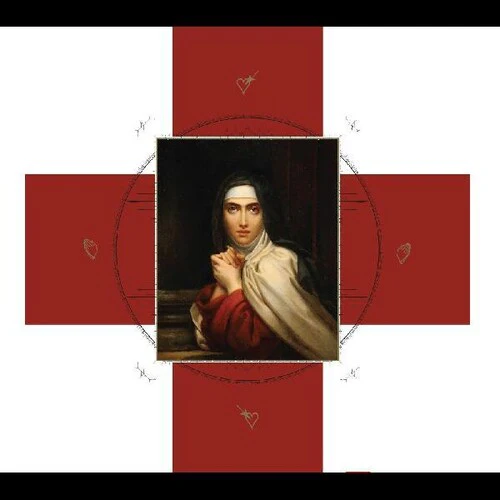
Shostakovich: Symphony No. 10; Balakirev: Islamey / Sanderling, Kondrashin
Kurt Sanderling (1912–2011), born in Prussia, fled Germany for the USSR on the invitation of his Jewish relatives living there, to seek artistic and personal refuge from the Nazi regime. He remained in the Soviet Union until 1960, working as assistant conductor and sharing concerts with the legendary Yevgeny Mravinsky, chief conductor of the Leningrad Philharmonic. In 1960, he moved to East Berlin to become music director of the Berlin Symphony Orchestra (1960–1977) and the Dresden Staatskapelle (1964–1967) and started conducting around Europe, Japan, the US, and in the UK forming a close rapport with the New Philharmonia (later Philharmonia) in 1972. He developed a strong personal relationship with Shostakovich, which began in 1943 and which lasted for decades. Shostakovich’s Symphony No.10, written in 1953 following the death of Stalin, is regarded by many as his greatest work. The composer said of it, ‘I wrote it right after Stalin’s death and no one has yet guessed what the symphony is about. It’s about Stalin and the Stalin years. The second part of the Scherzo is a musical portrait of Stalin.’ The short filler is a performance of Balakirev’s Islamey, directed by Kirill Kondrashin (1914–1981), one of Russia’s greatest conductors and a close friend of Shostakovich who recorded the entire cycle of the composer’s symphonies with the Moscow Philharmonic.
Product Information
Product Information
Shipping & Returns
Shipping & Returns

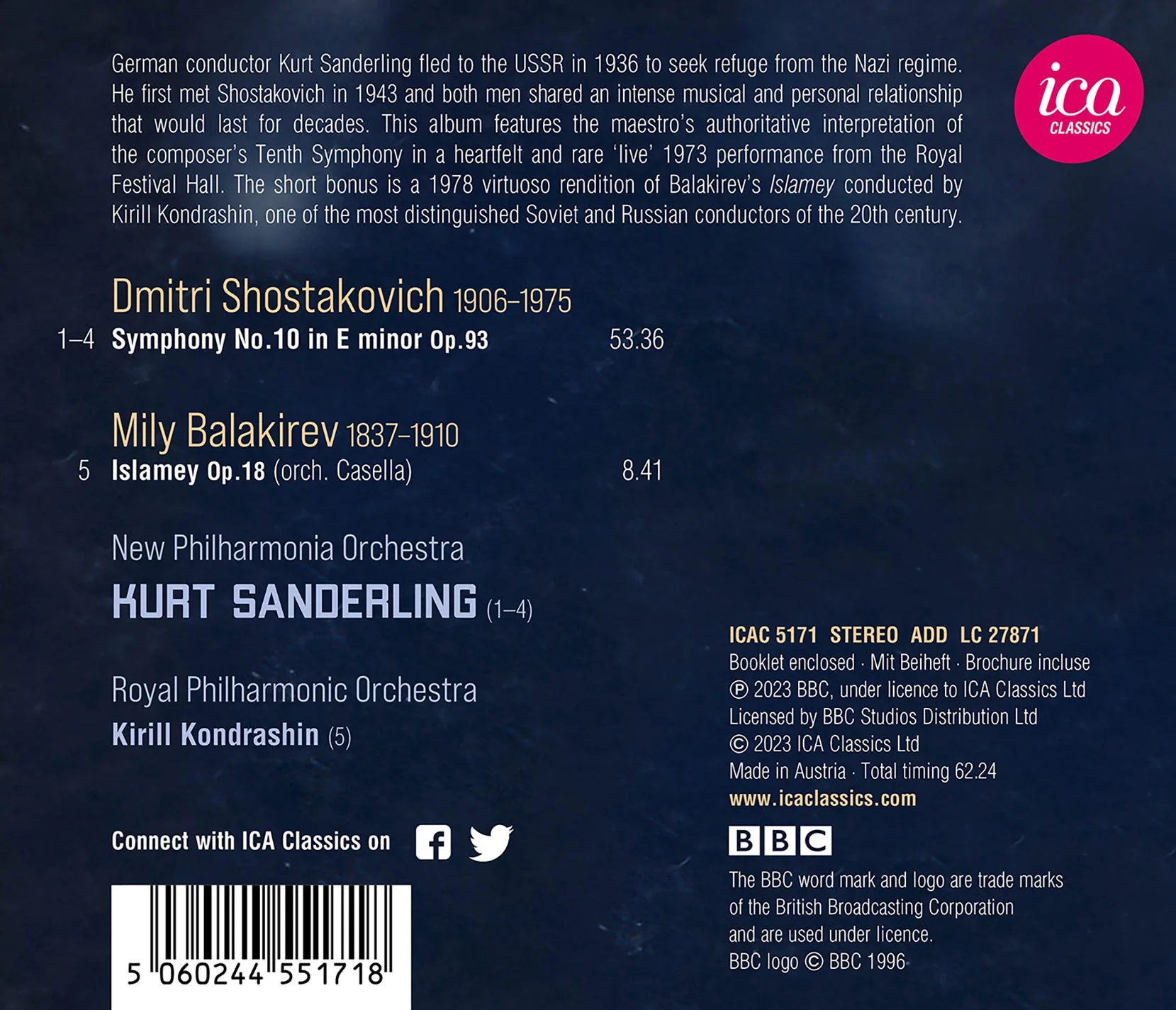
Shostakovich: Symphony No. 10; Balakirev: Islamey / Sanderling, Kondrashin
Shostakovich: Symphony No. 10; Balakirev: Islamey / Sanderling, Kondrashin
Kurt Sanderling (1912–2011), born in Prussia, fled Germany for the USSR on the invitation of his Jewish relatives living there, to seek artistic and personal refuge from the Nazi regime. He remained in the Soviet Union until 1960, working as assistant conductor and sharing concerts with the legendary Yevgeny Mravinsky, chief conductor of the Leningrad Philharmonic. In 1960, he moved to East Berlin to become music director of the Berlin Symphony Orchestra (1960–1977) and the Dresden Staatskapelle (1964–1967) and started conducting around Europe, Japan, the US, and in the UK forming a close rapport with the New Philharmonia (later Philharmonia) in 1972. He developed a strong personal relationship with Shostakovich, which began in 1943 and which lasted for decades. Shostakovich’s Symphony No.10, written in 1953 following the death of Stalin, is regarded by many as his greatest work. The composer said of it, ‘I wrote it right after Stalin’s death and no one has yet guessed what the symphony is about. It’s about Stalin and the Stalin years. The second part of the Scherzo is a musical portrait of Stalin.’ The short filler is a performance of Balakirev’s Islamey, directed by Kirill Kondrashin (1914–1981), one of Russia’s greatest conductors and a close friend of Shostakovich who recorded the entire cycle of the composer’s symphonies with the Moscow Philharmonic.
Original: $16.99
-65%$16.99
$5.95Product Information
Product Information
Shipping & Returns
Shipping & Returns
Description
Kurt Sanderling (1912–2011), born in Prussia, fled Germany for the USSR on the invitation of his Jewish relatives living there, to seek artistic and personal refuge from the Nazi regime. He remained in the Soviet Union until 1960, working as assistant conductor and sharing concerts with the legendary Yevgeny Mravinsky, chief conductor of the Leningrad Philharmonic. In 1960, he moved to East Berlin to become music director of the Berlin Symphony Orchestra (1960–1977) and the Dresden Staatskapelle (1964–1967) and started conducting around Europe, Japan, the US, and in the UK forming a close rapport with the New Philharmonia (later Philharmonia) in 1972. He developed a strong personal relationship with Shostakovich, which began in 1943 and which lasted for decades. Shostakovich’s Symphony No.10, written in 1953 following the death of Stalin, is regarded by many as his greatest work. The composer said of it, ‘I wrote it right after Stalin’s death and no one has yet guessed what the symphony is about. It’s about Stalin and the Stalin years. The second part of the Scherzo is a musical portrait of Stalin.’ The short filler is a performance of Balakirev’s Islamey, directed by Kirill Kondrashin (1914–1981), one of Russia’s greatest conductors and a close friend of Shostakovich who recorded the entire cycle of the composer’s symphonies with the Moscow Philharmonic.