🚚 Free Worldwide Shipping on All Orders!Shop Now
Gershwin, Muck: Rhapsody in Blue / Eichinger, Richter, Brno Philharmonic Orchestra
When George Gershwin presented his Rhapsody in Blue at Manhattan’s Aeolian Hall in 1924, Jazz had prized its way into the classical concert halls. Only one year later the Concerto in F followed – the motifs and themes ‘jazzy’, whilst bearing all the hallmarks of the instrumental concertos of the previous 150 years. After its premiere on December 3rd, 1925, at New York’s Carnegie Hall, the composer of songs Gershwin was fully established as a classical concert-composer. The Concerto for Piano (2020) was composed for Karl Eichinger as a commission of the state of Lower Austria by the 1990 Vienna-born Daniel Muck, who has always felt a stylistic connection with Gershwin, and hence is an expression of his intent to cleave the rift between the grand past of the romantic virtuoso concerto and contemporary popular music.
Product Information
Product Information
Shipping & Returns
Shipping & Returns
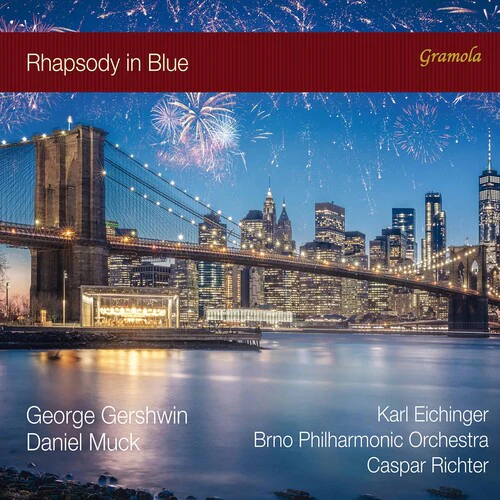
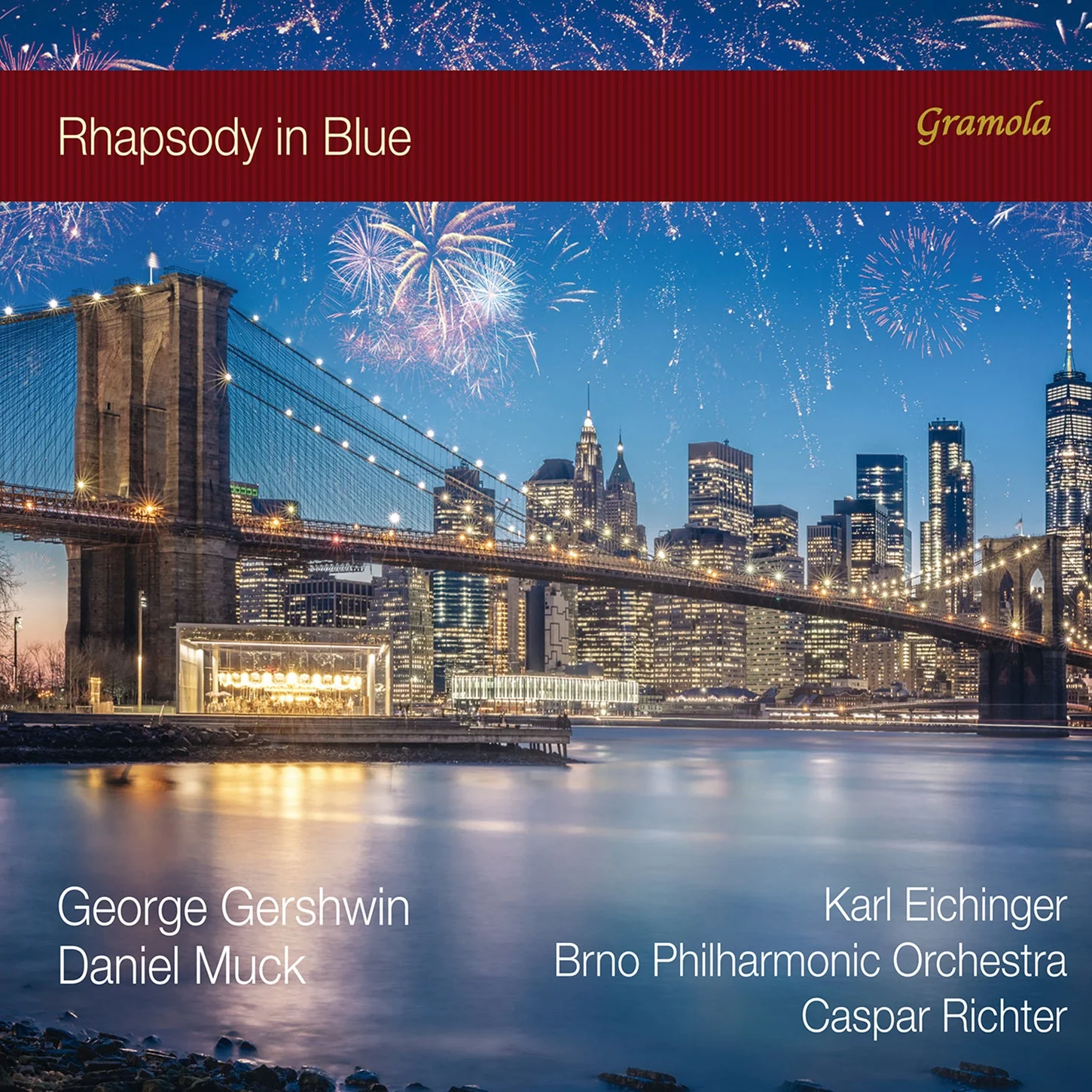
Gershwin, Muck: Rhapsody in Blue / Eichinger, Richter, Brno Philharmonic Orchestra
Gershwin, Muck: Rhapsody in Blue / Eichinger, Richter, Brno Philharmonic Orchestra
When George Gershwin presented his Rhapsody in Blue at Manhattan’s Aeolian Hall in 1924, Jazz had prized its way into the classical concert halls. Only one year later the Concerto in F followed – the motifs and themes ‘jazzy’, whilst bearing all the hallmarks of the instrumental concertos of the previous 150 years. After its premiere on December 3rd, 1925, at New York’s Carnegie Hall, the composer of songs Gershwin was fully established as a classical concert-composer. The Concerto for Piano (2020) was composed for Karl Eichinger as a commission of the state of Lower Austria by the 1990 Vienna-born Daniel Muck, who has always felt a stylistic connection with Gershwin, and hence is an expression of his intent to cleave the rift between the grand past of the romantic virtuoso concerto and contemporary popular music.
$21.99
Gershwin, Muck: Rhapsody in Blue / Eichinger, Richter, Brno Philharmonic Orchestra—
$21.99
Product Information
Product Information
Shipping & Returns
Shipping & Returns
Description
When George Gershwin presented his Rhapsody in Blue at Manhattan’s Aeolian Hall in 1924, Jazz had prized its way into the classical concert halls. Only one year later the Concerto in F followed – the motifs and themes ‘jazzy’, whilst bearing all the hallmarks of the instrumental concertos of the previous 150 years. After its premiere on December 3rd, 1925, at New York’s Carnegie Hall, the composer of songs Gershwin was fully established as a classical concert-composer. The Concerto for Piano (2020) was composed for Karl Eichinger as a commission of the state of Lower Austria by the 1990 Vienna-born Daniel Muck, who has always felt a stylistic connection with Gershwin, and hence is an expression of his intent to cleave the rift between the grand past of the romantic virtuoso concerto and contemporary popular music.