🚚 Free Worldwide Shipping on All Orders!Shop Now
Bax: Orchestral Works / Davis, BBC Philharmonic
Sir Andrew Davis is among the most distinguished interpreters of British music today and here turns to the works of Sir Arnold Bax. With the inclusion of the Phantasy for Viola and Orchestra, this album marks the completion of Chandos’s long project to record Bax’s complete orchestral music over time.
Born in 1883 into a wealthy family in London, Arnold Bax began a love affair with Ireland as a young man. He moved there in 1911 and his Four Orchestral Pieces from 1912 – 13 are deeply influenced by the landscape of the countryside near his Dublin home. The first three are better known in revised versions, from 1928, as Three Pieces for Small Orchestra. Here ‘The Dance of Wild Irravel’ joins the other three movements for the premiere recording of the four Pieces as Bax originally conceived and orchestrated them.
The Phantasy for Viola and Orchestra from 1920 was inspired by the strong feelings with which Bax responded to the Irish political turmoil at the time, underlined by his use of the Sinn Fein Marching Song (later the Irish national anthem) at its climax. Bax is celebrated for his melodic invention and this passionately lyrical score must be one of the finest examples of his gift. Here the soloist is Philip Dukes, described by The Times as ‘Great Britain’s most outstanding viola player’.
By 1927 Bax’s style was changing and the opening of the Overture, Elegy and Rondo is reminiscent of a classical concerto, suggesting a leaning towards then-fashionable neoclassicism. The long, dreamy melody of the middle section and brilliant, colourful orchestration, however, are unmistakable hallmarks of Bax’s individual voice. - Chandos
Reviews
“… Dukes is a sterling advocate of this unjustly neglected work [Phantasy] – the haunting cor anglais solo recalls the shepherd’s lament in Wagner’s Tristan – while Davis proves passionate in the impressionistic Four Orchestral Pieces and the powerful, dark Overture, Elegy and Rondo.” - Hugh Canning, The Sunday Times, Culture magazine, London – [September 14, 2014]
“All three of these rarely heard works come from the first half of Bax’s career as a composer. The earliest is the lightweight but charming set of Four orchestral Pieces from 1914, recorded here for the first time … The latest is the far more substantial Overture, Elegy and Rondo … Through stylistically the two works have their differences … both works reveal the same sure-footed handling of the orchestra, which these carefully manicured performances under conductor Andrew Davis show off beautifully…” - Andrew Clements, The Guardian, [August 29, 2014]
Born in 1883 into a wealthy family in London, Arnold Bax began a love affair with Ireland as a young man. He moved there in 1911 and his Four Orchestral Pieces from 1912 – 13 are deeply influenced by the landscape of the countryside near his Dublin home. The first three are better known in revised versions, from 1928, as Three Pieces for Small Orchestra. Here ‘The Dance of Wild Irravel’ joins the other three movements for the premiere recording of the four Pieces as Bax originally conceived and orchestrated them.
The Phantasy for Viola and Orchestra from 1920 was inspired by the strong feelings with which Bax responded to the Irish political turmoil at the time, underlined by his use of the Sinn Fein Marching Song (later the Irish national anthem) at its climax. Bax is celebrated for his melodic invention and this passionately lyrical score must be one of the finest examples of his gift. Here the soloist is Philip Dukes, described by The Times as ‘Great Britain’s most outstanding viola player’.
By 1927 Bax’s style was changing and the opening of the Overture, Elegy and Rondo is reminiscent of a classical concerto, suggesting a leaning towards then-fashionable neoclassicism. The long, dreamy melody of the middle section and brilliant, colourful orchestration, however, are unmistakable hallmarks of Bax’s individual voice. - Chandos
Reviews
“… Dukes is a sterling advocate of this unjustly neglected work [Phantasy] – the haunting cor anglais solo recalls the shepherd’s lament in Wagner’s Tristan – while Davis proves passionate in the impressionistic Four Orchestral Pieces and the powerful, dark Overture, Elegy and Rondo.” - Hugh Canning, The Sunday Times, Culture magazine, London – [September 14, 2014]
“All three of these rarely heard works come from the first half of Bax’s career as a composer. The earliest is the lightweight but charming set of Four orchestral Pieces from 1914, recorded here for the first time … The latest is the far more substantial Overture, Elegy and Rondo … Through stylistically the two works have their differences … both works reveal the same sure-footed handling of the orchestra, which these carefully manicured performances under conductor Andrew Davis show off beautifully…” - Andrew Clements, The Guardian, [August 29, 2014]
Product Information
Product Information
Shipping & Returns
Shipping & Returns

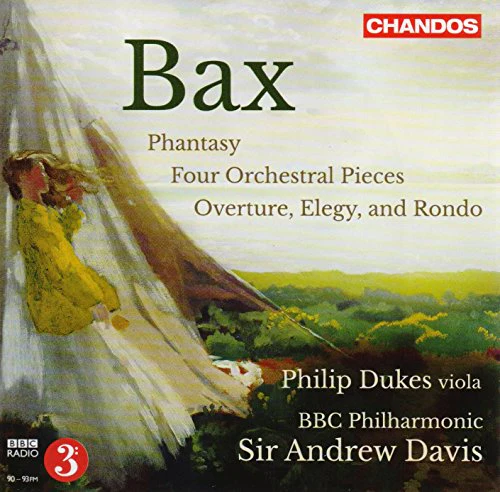
Bax: Orchestral Works / Davis, BBC Philharmonic
Bax: Orchestral Works / Davis, BBC Philharmonic
Sir Andrew Davis is among the most distinguished interpreters of British music today and here turns to the works of Sir Arnold Bax. With the inclusion of the Phantasy for Viola and Orchestra, this album marks the completion of Chandos’s long project to record Bax’s complete orchestral music over time.
Born in 1883 into a wealthy family in London, Arnold Bax began a love affair with Ireland as a young man. He moved there in 1911 and his Four Orchestral Pieces from 1912 – 13 are deeply influenced by the landscape of the countryside near his Dublin home. The first three are better known in revised versions, from 1928, as Three Pieces for Small Orchestra. Here ‘The Dance of Wild Irravel’ joins the other three movements for the premiere recording of the four Pieces as Bax originally conceived and orchestrated them.
The Phantasy for Viola and Orchestra from 1920 was inspired by the strong feelings with which Bax responded to the Irish political turmoil at the time, underlined by his use of the Sinn Fein Marching Song (later the Irish national anthem) at its climax. Bax is celebrated for his melodic invention and this passionately lyrical score must be one of the finest examples of his gift. Here the soloist is Philip Dukes, described by The Times as ‘Great Britain’s most outstanding viola player’.
By 1927 Bax’s style was changing and the opening of the Overture, Elegy and Rondo is reminiscent of a classical concerto, suggesting a leaning towards then-fashionable neoclassicism. The long, dreamy melody of the middle section and brilliant, colourful orchestration, however, are unmistakable hallmarks of Bax’s individual voice. - Chandos
Reviews
“… Dukes is a sterling advocate of this unjustly neglected work [Phantasy] – the haunting cor anglais solo recalls the shepherd’s lament in Wagner’s Tristan – while Davis proves passionate in the impressionistic Four Orchestral Pieces and the powerful, dark Overture, Elegy and Rondo.” - Hugh Canning, The Sunday Times, Culture magazine, London – [September 14, 2014]
“All three of these rarely heard works come from the first half of Bax’s career as a composer. The earliest is the lightweight but charming set of Four orchestral Pieces from 1914, recorded here for the first time … The latest is the far more substantial Overture, Elegy and Rondo … Through stylistically the two works have their differences … both works reveal the same sure-footed handling of the orchestra, which these carefully manicured performances under conductor Andrew Davis show off beautifully…” - Andrew Clements, The Guardian, [August 29, 2014]
Born in 1883 into a wealthy family in London, Arnold Bax began a love affair with Ireland as a young man. He moved there in 1911 and his Four Orchestral Pieces from 1912 – 13 are deeply influenced by the landscape of the countryside near his Dublin home. The first three are better known in revised versions, from 1928, as Three Pieces for Small Orchestra. Here ‘The Dance of Wild Irravel’ joins the other three movements for the premiere recording of the four Pieces as Bax originally conceived and orchestrated them.
The Phantasy for Viola and Orchestra from 1920 was inspired by the strong feelings with which Bax responded to the Irish political turmoil at the time, underlined by his use of the Sinn Fein Marching Song (later the Irish national anthem) at its climax. Bax is celebrated for his melodic invention and this passionately lyrical score must be one of the finest examples of his gift. Here the soloist is Philip Dukes, described by The Times as ‘Great Britain’s most outstanding viola player’.
By 1927 Bax’s style was changing and the opening of the Overture, Elegy and Rondo is reminiscent of a classical concerto, suggesting a leaning towards then-fashionable neoclassicism. The long, dreamy melody of the middle section and brilliant, colourful orchestration, however, are unmistakable hallmarks of Bax’s individual voice. - Chandos
Reviews
“… Dukes is a sterling advocate of this unjustly neglected work [Phantasy] – the haunting cor anglais solo recalls the shepherd’s lament in Wagner’s Tristan – while Davis proves passionate in the impressionistic Four Orchestral Pieces and the powerful, dark Overture, Elegy and Rondo.” - Hugh Canning, The Sunday Times, Culture magazine, London – [September 14, 2014]
“All three of these rarely heard works come from the first half of Bax’s career as a composer. The earliest is the lightweight but charming set of Four orchestral Pieces from 1914, recorded here for the first time … The latest is the far more substantial Overture, Elegy and Rondo … Through stylistically the two works have their differences … both works reveal the same sure-footed handling of the orchestra, which these carefully manicured performances under conductor Andrew Davis show off beautifully…” - Andrew Clements, The Guardian, [August 29, 2014]
$21.99
Bax: Orchestral Works / Davis, BBC Philharmonic—
$21.99
Product Information
Product Information
Shipping & Returns
Shipping & Returns
Description
Sir Andrew Davis is among the most distinguished interpreters of British music today and here turns to the works of Sir Arnold Bax. With the inclusion of the Phantasy for Viola and Orchestra, this album marks the completion of Chandos’s long project to record Bax’s complete orchestral music over time.
Born in 1883 into a wealthy family in London, Arnold Bax began a love affair with Ireland as a young man. He moved there in 1911 and his Four Orchestral Pieces from 1912 – 13 are deeply influenced by the landscape of the countryside near his Dublin home. The first three are better known in revised versions, from 1928, as Three Pieces for Small Orchestra. Here ‘The Dance of Wild Irravel’ joins the other three movements for the premiere recording of the four Pieces as Bax originally conceived and orchestrated them.
The Phantasy for Viola and Orchestra from 1920 was inspired by the strong feelings with which Bax responded to the Irish political turmoil at the time, underlined by his use of the Sinn Fein Marching Song (later the Irish national anthem) at its climax. Bax is celebrated for his melodic invention and this passionately lyrical score must be one of the finest examples of his gift. Here the soloist is Philip Dukes, described by The Times as ‘Great Britain’s most outstanding viola player’.
By 1927 Bax’s style was changing and the opening of the Overture, Elegy and Rondo is reminiscent of a classical concerto, suggesting a leaning towards then-fashionable neoclassicism. The long, dreamy melody of the middle section and brilliant, colourful orchestration, however, are unmistakable hallmarks of Bax’s individual voice. - Chandos
Reviews
“… Dukes is a sterling advocate of this unjustly neglected work [Phantasy] – the haunting cor anglais solo recalls the shepherd’s lament in Wagner’s Tristan – while Davis proves passionate in the impressionistic Four Orchestral Pieces and the powerful, dark Overture, Elegy and Rondo.” - Hugh Canning, The Sunday Times, Culture magazine, London – [September 14, 2014]
“All three of these rarely heard works come from the first half of Bax’s career as a composer. The earliest is the lightweight but charming set of Four orchestral Pieces from 1914, recorded here for the first time … The latest is the far more substantial Overture, Elegy and Rondo … Through stylistically the two works have their differences … both works reveal the same sure-footed handling of the orchestra, which these carefully manicured performances under conductor Andrew Davis show off beautifully…” - Andrew Clements, The Guardian, [August 29, 2014]
Born in 1883 into a wealthy family in London, Arnold Bax began a love affair with Ireland as a young man. He moved there in 1911 and his Four Orchestral Pieces from 1912 – 13 are deeply influenced by the landscape of the countryside near his Dublin home. The first three are better known in revised versions, from 1928, as Three Pieces for Small Orchestra. Here ‘The Dance of Wild Irravel’ joins the other three movements for the premiere recording of the four Pieces as Bax originally conceived and orchestrated them.
The Phantasy for Viola and Orchestra from 1920 was inspired by the strong feelings with which Bax responded to the Irish political turmoil at the time, underlined by his use of the Sinn Fein Marching Song (later the Irish national anthem) at its climax. Bax is celebrated for his melodic invention and this passionately lyrical score must be one of the finest examples of his gift. Here the soloist is Philip Dukes, described by The Times as ‘Great Britain’s most outstanding viola player’.
By 1927 Bax’s style was changing and the opening of the Overture, Elegy and Rondo is reminiscent of a classical concerto, suggesting a leaning towards then-fashionable neoclassicism. The long, dreamy melody of the middle section and brilliant, colourful orchestration, however, are unmistakable hallmarks of Bax’s individual voice. - Chandos
Reviews
“… Dukes is a sterling advocate of this unjustly neglected work [Phantasy] – the haunting cor anglais solo recalls the shepherd’s lament in Wagner’s Tristan – while Davis proves passionate in the impressionistic Four Orchestral Pieces and the powerful, dark Overture, Elegy and Rondo.” - Hugh Canning, The Sunday Times, Culture magazine, London – [September 14, 2014]
“All three of these rarely heard works come from the first half of Bax’s career as a composer. The earliest is the lightweight but charming set of Four orchestral Pieces from 1914, recorded here for the first time … The latest is the far more substantial Overture, Elegy and Rondo … Through stylistically the two works have their differences … both works reveal the same sure-footed handling of the orchestra, which these carefully manicured performances under conductor Andrew Davis show off beautifully…” - Andrew Clements, The Guardian, [August 29, 2014]